Wednesday, May 24, 2006

O’Connor’s Federal Rules: Civil Trials 2005


Michael C. Smith is an attorney with The Roth Law Firm in Marshall, Texas, where he specializes in product liability, and complex commercial and patent litigation in federal and state courts. Smith has served as chairman of the Local Rules Advisory Committee for the U.S. District Court for the Eastern District of Texas since 2000 and is president of the Eastern District of Texas Bar Association. He has updated O’Connor’s Federal Rules: Civil Trials 2005 published by Jones McClure Publishing, Texas, 2005. It is a bulky tome (1200 pages) whose intended readership comprises lawyers and judges.

Smith’s book is a rulebook on procedure in federal courts, divided into ten main sections, which exhaustively deal with all the aspects of trials in civil courts. Half of the book’s volume details commentaries on the framework of procedures that are to be legally followed in a civil court. The commentaries deal with introduction to the Federal Rules, various considerations on part of attorneys and plaintiffs, proofs and evidences, judgment factors, hearings and pleadings, and all contained within and related to such issues.

The rest of the book deals with MultiDistrict Litigation Rules, Federal Rules (of Civil Procedures, Evidences, and Appellate Procedures), Code and Constitution of the United States, Advisory Committee Notes to Rules, the Hague Convention on Service Abroad, and eventually with Timetables followed in civil court procedures.

The author has taken care to refer district judges as the ‘district court’ and parties as ‘it’, presenting them as corporations (which they often are). This certainly has helped him make a gender-neutral voice.

An index categorizing the major topics with detailed sub-headings, alphabetically, has been added to facilitate topic search.

In sum, Smith’s Civil Trials guide is the law-professional’s complete source for advice and knowledge on every aspect of civil trials in the U.S.

ISBN: 1884554962

Availability

http://www.amazon.com/gp/product/1884554962/ref=pd_rhf_p_1/104-1196110-6435960?%5Fencoding=UTF8&v=glance&n=283155

Author’s Website: http://mcsmith.blogs.com/about.html

Wednesday, May 17, 2006

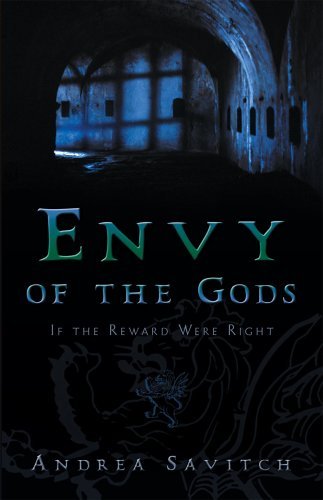
Envy of the Gods: If The Reward Were Right


Envy of the Gods (Bridgeway Books, Texas, 2006) is the first in Andrea Savitch’s trilogy of fiction. Set in the medieval world of Raalek, the tale gives an account of power-hungry Duke Atan Ishtba whose recklessness could not be checked by any means until the arrival of beautiful and willful Raphela. In 316 pages, Andrea Savitch circumscribes the peak period of the lives of her two main characters with sensuality and power as her motifs.

Savitch’s work has the desirable quality needed for every work of fiction, a smooth and fluent narration. Her use of language is creative and there are no verbal barriers in the reader’s progress with the book. Letting the reader know in the first page that the story of the Duke is told on the first night each spring readily induces the ambience of folklore. The story of the young Duke’s craving for power and Raphela’s passion for conquering him hooks the reader from the first few chapters.

Then the unwieldiness of the novel’s plot starts hovering over the mind. Little description of the Castle Cordan, the characters, and the social world, the emptiness of events and their causal unrelatedness all render the tale incapable of a deeper impact. Accounts of punishment and subsequent compassion are highly incompatible with the outlines of characters. The author’s unending concern with Mahtso’s chain bothers. Before late, the interaction of characters assumes a mechanical air that seems to linger until the meeting of Raphela and Nabus at the end, a scene touching in its unaffectedness.

The transformation of Atan into a man from a beast and Raphela’s victory in standing by her love of knowledge give something of a plot to Savitch’s tale. The title stays unthought of. It is the Absence of Gods that needs to be dealt with. The story of Svaitch’s ‘legends of power’ is not over and in the coming ventures a convincing conclusion can be hoped for.


Availability

http://www.amazon.com/gp/product/1933538112/qid=1147871700/sr=11-1/ref=sr_11_1/104-6228281-5223923?n=283155

Author’s Website http://www.authorsden.com/wwwraalekcom

ISBN: 1933538112

Friday, May 05, 2006

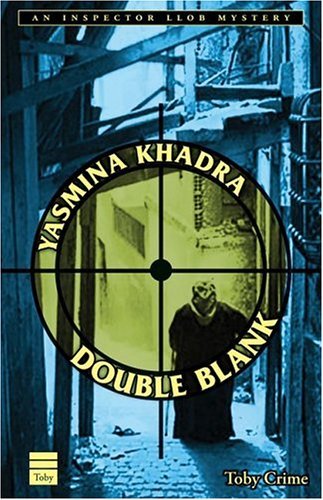
Double Blank


Double Blank

Drugs, lies, murders, and hunt for the culprit at the root-a typical crime story everyone has been watching for decades. This time Yasmina Khadra sets the scene in Algeria with his (or her, if you would) political thriller Double Blank (Toby Press, Connecticut, 2005). We now know Khadra is the nom de plume of Mohammed Moulessehoul, an Algerian army officer whose books breach the underpinnings of violence in Algeria. It is easy to see where a modern political thriller like Double Blank ends up-at the doorstep of a crooked businessman cum politician. And Khadra gets us way up there.

Double Blank tells of police superintendent, Mr. Llob, who is set to track the hand behind a series of murders involving puppets in the drug market and the red-light district. Things get to a little higher level as clues point to a conspiracy theory living in a diskette. There is little new in the 140 pages of killings and investigation except its Algerian setting. You are watching Law and Order with some added action and subtracted coherence of plot.

Khadra’s book is a prey to many weaknesses. It is supposed to be a novel but the mode of narration is typical of a short story. The voice of the narrator in present has unnaturalness hard to put up with, especially in a story with events that certainly have taken place in the past. There is little true action in the story and the most blatant murders happen in two sentences. Lack of description leaves a very poor mental picture of the scenes. Characters too are extremely ill-defined and character development seems a thing alien to the author’s concern.

The most fatal slump of Double Blank is, perhaps, the quirky employment of humor throughout the telling of events. Superintendent Llob’s voice sounds detached from its inner care for peace by constantly gushing out twisted quips, many of which are too idiosyncratic to be appreciated. Clumsy experimenting it language and slack exaggeration for the sake of humor nullifies the effect of Khadra’s tale. In general, Double Blank falls too very short of a novel. It sounds like a story you try to get involved in as a reader and always find yourself far behind where you started.

ISBN: 1592641199

Availability

http://www.amazon.com/gp/product/1592641199/sr=8-4/qid=1146890579/ref=sr_1_4/104-4299122-1619947?%5Fencoding=UTF8

http://www.smarter.com/books-1/product/double_blank-480167/?source=inktomi_books480167

Sunday, April 30, 2006

Your Healing Diet: A Quick Guide to Reversing Psoriasis and Chronic Diseases with Healing Foods

The impetus for writing a book against psoriasis came from Deirdre Earls’ own long and painful encounter with the skin condition. The dietitian from Texas chose a more natural way of tackling her problem by healing with diet instead of chemotherapy. Her book Your Healing Diet (BookSurge Publishing, South Carolina, 2006) gives dietary advice on coping with problems, including psoriasis, resulting from noxious food.

Though Earls’ book is a short one, mere 62 pages, it offers a simple and clear explanation of the anatomy of psoriasis and other diseased conditions in terms of food intake and digestion. Particularly informative and interesting are the author’s description of human body’s acid/alkaline balance, nutritional value of different food species, and comparison of natural versus processed food items. The facts sum up to the uncommon but wholesome principle of ‘healing from the inside out’ rather than ‘healing only the symptoms from the outside in’.

Earls puts forth her three central healing principles: diet, positive outlook, and outdoor activity. The brunt of her dietary commendation stands on fresh vegetarian food, discouraging flesh, fat, and artificial snacks. She shares her own culinary chart with the readers, caring for taste, which, to her, comes after good health.

The real value of her work is latent in the power of motivation her words stir up in the reader. The many side effects of drugs are the horror of a patient. Knowledge of our natural nutritional treasure is essential to each and every person who is having health problems of any sort. Earls’ short book comes close to achieving this aim.

For Americans, or those visiting here, Your healing Diet is of practical guidance in that it has a list of stores where food of value can be purchased. Whether one is home or traveling, Earls’ book is a good guide to better eating.


ISBN: 1419617079

Availability

http://www.amazon.com/gp/product/1419617079/ref=pd_rhf_p_1/102-7375182-1703301?%5Fencoding=UTF8&v=glance&n=283155

Author Website: http://www.yourhealingdiet.net/pages/1/index.htm

Friday, April 28, 2006

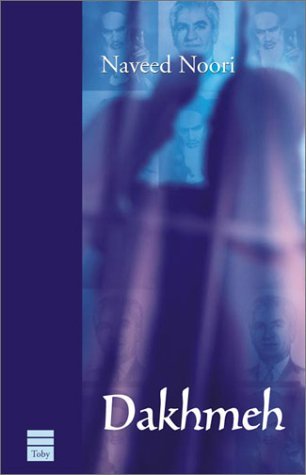
Dakhmeh


Naveed Nori is an author’s pseudonym now getting to be known for his novel Dakhmeh (Toby Press, USA, 2003). Noori’s work is disturbing, antirevolutionary, and almost deliriously scornful toward Islamic totalitarianism in post revolutionary Iran.

Dakhmeh is the story of a young, irreligious man, Arash whose nostalgic compulsion drives him back to Iran, his home country that his family fled during the war of Islamic Revolution. The misery of post revolutionary Iranian life shatters his idealistic picture of life in his country and he ends up as a political prisoner somewhere between sanity and madness.

From the first page, the text of the book hits the reader as poorly written, egotistical, and sloppy. The story lacks a clear point and character development is null. Narration is mostly incoherent with alternating first person and omniscient modes, both abruptly truncating. Too much of personal pique shows on every page till the end. Even conversation between the vaguely portrayed characters feel like formal interviews, all leading to a prefigured viewpoint.

Certainly the author has plucked a significant string in the history of politics and societal transformation. His (?) criticism of media and cruel treatment of all creatures outside the fundamentalist’s circle are of appeal to the humanistic mind. Still, Noori fails badly as a novelist. The motives of his (?) protagonist are diffused and Arash’s obsession with socio political change is utterly boring. Lack of meaning in the protagonist’s experiences is disappointingly manifest. His vindictive bitterness pours out on leaders and historical figures alike, childishly with little thought or coherence of ideas. The intended audience of the author is also hard to imagine.

In general, Dakhmeh is a frumpy text of sloppily worked political history and social dilapidation. After Arash contracts a prostitute, we read him asking himself ‘Where was I heading?’ A reader’s wish might well be ‘If only the author had asked himself (?) the same question before setting out to write this book.’

ISBN: 190288177X

Availability

http://www.amazon.com/gp/product/190288177X/ref=sr_11_1/103-3586972-1229420?%5Fencoding=UTF8
http://search.barnesandnoble.com/booksearch/isbnInquiry.asp?isbn=190288177X

Thursday, April 20, 2006

Chains Around the Grass


Naomi Ragen is an international bestseller novelist, a writer of and about the core of human life. Chains Around the Grass (The Toby Press, USA, 2003) is the book Ms. Ragen says that she became an author to write. Setting the story of a poor Jewish family in the heart of America, Naomi Ragen calls for a revision of attitudes shaped by the sickness of reckless capitalism and its people who have turned into machines fuelled with business.

The novel’s prologue is captivating. Through the eyes of the moment, little Sara Markowitz is shown sitting in humility in her rich uncle’s house with her mother Ruth and brother Jesse out for the funeral of her father David Markowitz. Pursuing the old American dream of a well-off future, David never realizes the greater need of familial love that is showering him all along and the lives of his family chug along the uncertain paths of the business world. With the loss of David the family slumps into an indefinable channel of struggle against the demands of the society and its own integrity.

Chains Around the Grass is one of the semantically richest works carrying a number of issues. Sick capitalist values are questioned in the suffering of widowed Ruth and her children with several close, rich, relatives. The dilemma of a poor minority’s identity under social pressure speaks in Ruth’s resentment of changing Jesse’s family name to ‘Marks’. What underlies insanity is illustrated cogently in Jesse’s character. Sara’s character embodies the process of personality development under early childhood traumas. The best explored is, perhaps, gender inequality prevailing in the social world, best instantiated in Sara’s feelings of hatred towards her own brother.

Naomi Ragen’s striking symbolism in her novel’s situations is the quality of her work that best complements other merits. The heaven of idealized life is shattered to ‘chips flying away under time’s relentless chisel’. When they were united and beautiful like young lush grass, they were out of reach on account of ‘chains’ around them. One set of ‘ropes’ is replaced with another and the dream of catching your life’s beauty is never actualized until you see your life’s time ending abruptly like a dream. Naomi Ragen is at her best in justice with her characters. Reality comes to them as they finally learn to ‘measure their life with the right yardstick’. Through Ruth’s faith, we all know that a purely humanistic relationship is possible if we know the beauty of our inner self. It is an illustration of Eric Fromm’s humanistic psychoanalysis; a story as real as reading one’s own mind.

With all its beauty of language and elements of realistic fiction, Chains Around the Grass carries a problem as a book. The title and the prologue are suggestive of Sara as being the protagonist. It is through Sara’s eyes that the tenderness of life and monsters of fear are revealed to us but Sara’s character is treated scantily as compared to that of her parents and her brother Jesse. Essentially it is the story of Ruth’s life. Her figure could have given a better illustrative title and prologue.

ISBN: 1902881826

Availability

http://www.amazon.com/gp/product/1902881826/sr=8-1/qid=1145592177/ref=pd_bbs_1/104-8372197-3161517?%5Fencoding=UTF8

http://www.ecampus.com/book/1902881532


Author’s Website: http://naomiragen.com/

Sunday, April 16, 2006

Three 1-Act Plays


The second volume of Tom Anselmo plays Three 1-Act Plays (Red Brindle Press, New York, 2006) is not a series like the first one Gail’s Place by virtue of the same protagonist and unity of place, but by the common motif resolution of self’s internal conflicts. As Anselmo puts it in his preface to the plays ‘I write about people who are on the verge of self-discovery’, the book causes the conflicts in an individual’s mind peep through the voice of the leading characters. As the person in the story discovers his or her own suppressed urges, values of familial love, commitment, and obligation undergo critical scanning.

The plays begin with Matt and Sara, set in a resort, in which the protagonists consciously deny themselves aspects of their personalities that society might find obnoxious. Matt gives up speaking in company to evade any awkwardness on account of his stuttering. Sara is a self-restrainer, ashamed of her aunt’s showy manners practiced for winning men’s affection. Their need and struggle for self-acceptance bring them together on common grounds. The theme of the play symbolically comes out to be the victory of human understanding over flirtatious ostentation in any meaningful relationship.

Getting deeper to the core of the conflict is The Voices, a play in which two different impulses of Cathy, the heroine, are personified characters. The issue at hand is Cathy’s suspicion of Steve in regard to his sincerity to Ellie, Cathy’s friend and Steve’s girlfriend. Cathy has seen Steve with another young woman in way that makes her inner voices contend for keeping or revealing the incident to Ellie. The first voice presses on retaining the secret for the sake of intimacy while the second one is resolved on squaring things at the surface for the sake of making relationships better. Anselmo presented the conflict in Gail’s Place. Only this time both impulses are vis-à-vis, sweeping dust off the true nature of social reality: is social reality there as matter of course, or is it created when one impulse gets over the others to seize the self? The author leaves the question open to the audience, to be taken up by their own inner voices.

Summing up the argument between the inner voices in the third play Penny is again Gail Stanza, heroine of Anselmo’s trilogy of 2-act plays Gail’s Place. Eponymous Penny is Gail’s sister in law who has continued pampering her husband Robby despite his repeated indulgence in gambling. As Penny asks Gail for help with their debt, Gail reacts crossly to Penny’s blind devotion to her husband in the name of love. The dialogue between Gail, Ron, and Penny brings out the issue of familial obligation versus common sense. The underlying question is whether sympathy should be furthered or checked when one’s peace of mind is knuckling under it.

Anselmo’s plays renovate the tradition of serious drama by invoking a debate over the limitations of social norms and individual obligation to follow them. The scope of his discussion is multifold, pertinent to matters of family, sense, obligation, spontaneity of one’s self, and discovery of new ways of existing against the modus vivendi.

Anselmo’s Three 1-Act Plays is the thoughtful mind’s donut.

ISBN: 0977079422

Availability:

http://www.amazon.com/gp/product/0977079422/ref=pd_rhf_p_2/002-3689637-3607238?n=283155&no=%2A&s=books&v=glance

Wednesday, April 12, 2006

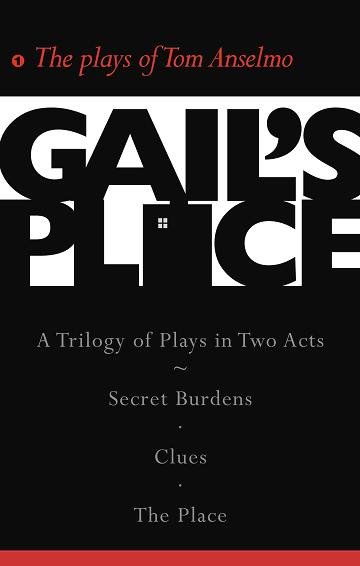
Gail’s Place: A Trilogy of Plays in Two Acts


Thomas Hardy didactically preserved his Tess, a young woman who attempted to be honest in her intimate relationship by revealing her secret, and thus ended at the gallows. Tom Anselmo takes care to let his Gail clinch a footing in both her inner and social worlds as she unveils the mask of falsity in relationships. Anselmo’s first volume of plays is a trilogy of two-act plays by the title Gail’s Place (Red Brindle Press, New York, 2006). While each plays stands on its own plot, central to all is Gail Stanza’s character, a woman who is bent on reconciling her inner self with that of her social role by cracking secrets that tend to stifle one’s individuality and true identity.

The opening play Secret Burdens centers Gail Stanza at the heart of their party in the honor of their friends’ marriage anniversary. While Lily attributes her marriage’s success to care in keeping secrets from the spouse, as do Mark and Evelyn, Gail is disposed nearly in excess to resurrect past grievances so as to ensure calm in the future. Gail’s character has no hint of sullenness about her and so the audience is likely to appreciate her assertiveness as the moral implications of it unfold.

Clues starts as a detective drama with Evelyn Harper lying in coma in the hospital. Gail’s speculations about Mark are turning into reality and the question of responsibility arises from the depth of Gail’s character. We meet Gail’s inner self, personified, and conversing with Gail over shutting down of vital human sensibilities. Gail’s self-conscious speech makes her a lovable character: ‘I have the distinguished honor of being a big-mouth.’ And her pride in her truthfulness is an impetus to secretive sufferers like Margaret: ‘I’m glad I don’t have the kind of ties that turn us into moral pretzels.’ As Gail scatters the shards of hypocrisy for good, Lily sees her own inner self, clad in a shroud, rising and walking. Anselmo’s genius shows, not tells, how to connect with your being’s center.

The third play The Place moves the argument closer into Gail’s home as her husband Ron finds himself at odds with his inner self against his colleague’s promotion grounded on Ron’s support. Carl is suspected of sexual harassment of one of his students. Again it is Gail who goads her husband to act in harmony with his inner voice. Gail’s personified, abstract, self finds a mate in form of Ron’s resurrected center. Alongside we see the false consciousness of Lynn, Carl’s wife, who accepts compromise as matter of course.

Anselmo has fixed the familiar signboard of serious drama in the history of modern literature. With no foul language, no hip-hop mania, conscientious protagonists, and character-driven situations, Anselmo’s plays speak the truth about the nature of secrets, their implications, and behavioral significance.

The serious subject matter and ease of writing style place Anselmo’s book among lovable reads.

ISBN: 0977079414

Availability

http://www.amazon.com/gp/product/0977079414/qid=1144838070/sr=1-1/ref=sr_1_1/103-9724660-3863057?s=books&v=glance&n=283155

Author Website: http://www.tomanselmo.com/index.html

Saturday, April 08, 2006

Heaven’s Witness


In the vista are two authors, Joseph Telushkin and Allen Estrin, who have joined heads to chill the breath of mystery nuts with their paranormal psychological thriller Heaven’s Witness (Toby Press, Connecticut, USA, 2004). The prologue of this 462 pages, hardbound, chiller sets one’s curiosity on heels in a second and keeps the reader’s breath stranded for a pretty good while.

To call Heaven’s’ Witness a unique thriller of its kind would be overlooking an overwhelming number of thriller books and movies. Those Indian flick maniacs are long familiar with the ‘transmigration of soul’ belief and even in Hollywood it is not a novel idea. Heaven’s Witnes's specialty is the way it has attempted to reconcile the age-old idea of soul survival with the partially explored realm of paranormal psychology.

In the novel, we meet Robin Norris, a young actress of twenty-five, who is taken in deep hypnotic trance by a psychiatrist Jordan Geller. In a state of regression, Robin assumes the identity of a seventeen-year old girl Beverly Casper and describes a horrifying murder scene of the teenager, a murder that took place seven years prior to Robin’s birth. Who can resist leaping up! The story thus proceeds in the usual suspense movie style with a series of murders of teenage girls, each killing followed by a message to the parents from the Messenger, the serial killer. Suspects get shifting in the reader’s mind and the protagonists run themselves in deeper trouble before finally coming up with the Messenger’s real identity.

Two things undermine the novel’s take over. First, the question killer who? is answered nearly in full by the time we read a little more than half of the book. Second, the curiosity about why is quenched at nearly the same time. What is worse is that the main hook in the story Is Robin’s account an instance of reincarnation or a rationally possible revival of suppressed memory? is left unresolved at the end. The effect is like being cheated.

There are weaknesses that are all too obtrusive. Dr. Geller’s hypnotic skills working on Robin are almost cartoonish. Lack of character development is the book’s Achilles Heel. The element of romance in the story is little more than dead and we look at a passive, talking-only hero. The situations are not effectively experienced from any single character’s eyes and a feeling of detachment from the whole tale prevails through most of the book’s’ length. Perhaps it is what comes off when you try to gather thirty-two years of mystery in two weeks of the narration’s span.

In spite of all the weaknesses, Heaven’s Witness has some convincingly appreciable qualities. Deviant psychiatrist Geoffrey Bolton’s belief things just don’t happen, there’s a reason is a conviction that strengthens Dr. Geller’s case of pursuing his view of reality with genuine force. The need to deviate from the stereotyped and clichéd has found firm footing in the story’s framework. Still more significant is the psychological peep into the depths of some common diseased products of life: the panic-stricken writer whose real disease is the degradation of audience’s taste of comedy, the porn-obsessed young man whose root problem is low self-esteem on account of his homely figure, and the mother-hating young woman who is the victim of her domineering mother’s hard-shelled feminism.

Heaven’s Witness is a nice read but not hypnotically riveting.


ISBN: 1592640915
Availability

http://search.barnesandnoble.com/booksearch/isbnInquiry.asp?isbn=1592640915

http://www.amazon.com/exec/obidos/ASIN/1592640915/ref=ase_thetobypress-20/103-2282091-6541424

Saturday, April 01, 2006

Slow Dancing at Death’s Door: Helping Your Parent Through the Last Stages of Life


It is impressive to see that a woman, Amy C. Baker, from the corporate world has stepped forward to show us our deepest human value: the need for serving our departing generation. Her book Slow Dancing at Death’s Door (Life Journey/Cook International, Colorado, 2006) incarnates a healthy form of what has been called ‘Survivor’s Syndrome’. Amy Baker exhausts her experience of anger, frustration, loneliness, and grief, that are the lot of so many aging members of our ‘Sandwich Generation’, and comes out with an enlightening lesson: forgiving for not knowing better.

Losing her mother to cancer and father to Hepatitis C, Amy Baker recounts what it feels like losing your loved ones and how best you can play your role of a caring child, at the same time a spouse, a parent, a responsible employee, and many temporary roles that one is obliged to take in life. That business world has not calcified her human spirit shows in Baker’s account of all she did for her dying parents to claim her success as a humane being. That she is an intelligent writer is evident from the warmth and energy of emotion that saturate her expression throughout the book.

As Amy Baker maturely embellishes her passages with good-hearted humor, the gravity of a subject like death (and that of one’s own parents) has no chance to oppress or offend the reader. However, Baker does more than that. With her faith, she illustrates the falsity of our perfection-seeking attitude towards life, thus showing us the importance to shed our slough of self-centeredness while at the same time not overlooking the need to take care of ourselves in order to be able to care for our parents. The emphasis is on growth not only in flesh and blood but more so in human spirit. On the practical side, we can see advice on hospice, management of ailing parents, and legal matters pertaining to inheritance, estate panning, and wills.

The nonconformist reader might frown over Baker’s frequent resort to biblical quotes, which are seen as the source of inspiration and divine power. This does become a bit obtrusive, especially at end of the book, where the author discusses preserving family history for future generations. Nevertheless, the spontaneity of her account of her parents’ death holds high her attempt to ‘light beacons of hope’ in her reader’s heart. The touching beauty of Amy Baker’s tapestry of words in paying homage to her late parents is heart winning. She is one writer who emerges victorious from her situation as a caring survivor.

ISBN: 0781442621

Availability

http://www.amazon.com/gp/product/0781442621/002-0762099-9752030?v=glance&n=283155

http://www.powells.com/biblio?show=TRADE%20PAPER:NEW:0781442621:13.99#synopses_and_reviews

http://www.allbookstores.com/book/0781442621/Slow_Dancing_At_Death

Author’s Website http://www.amycbaker.com/

Sunday, March 26, 2006

Dressed in Fiction


Starting with a discussion of the centrality of fashion in dress to human behavior, independent scholar Clair Hughes takes a look at the employment of dress in select English fiction in her book Dressed in Fiction (Berg Publishers, Oxford-New York, 2006). Clair’s work is a confluence of literary criticism and critical description of scenes of dress in a group of English fictional texts written over a period of about 200 years, from early eighteenth to the late twentieth century.

As the author admits beforehand, most of her discussion in the book is of fashionable, middle or upper class clothes; the reason being that dress of the underclass varies little until the advent of the mass market. The novels chosen for the bulk of the discussion range from Daniel Defoe’s Roxana to Edith Wharton’s The House of Mirth, and the author sums up the topic in a quick glance at fiction from Samuel Richardson’s Pamela to Anita Brookner’s Hotel Du Lac.

While Clair Hughes makes women’s dress the core of her consideration, she does not fail to relate the ideas of gender, color of the dress, technical terms for costumes, and the excess or absence of dress references. Thus an interest in history and society is at once sated through the medium of clothing. Literary criticism shows in the author’s ingenious foray of the exploration of how fiction authors’ employment of dress and its accessories can illuminate the structure of that text. Ultimately, human values of the specific social world that existed at the time of the text’s creation are researched.

Supplementing the book’s discussion are paintings or engravings of nearly the same date as the text in view, imparting a general image of the period and its particular style of dress. This is a merit of the book that counts.

Dressed in Fiction has its shortcomings. Devoting an appreciable amount of space to history and stories of the fictional works, it fails at places to relate strongly the employment of dress with the main frame of the novel’s plot. An intrinsic connection of situations taken up for explanation with the dress described does not always seem valid.

Endnotes, a bibliography, and an index at the end of the book give an academically professional touch to it.

In its entirety, Dressed in Fiction is an experimental work following the lines of Gillian Beer’s 1989 book Arguing with the Past. It opens up a topic for critical discussion to be fathomed by future studies.

ISBN: 1845201728

Availability

http://www.amazon.com/gp/product/1845201728/sr=8-1/qid=1143386870/ref=pd_bbs_1/103-9167745-6114234?%5Fencoding=UTF8

http://www.walmart.com/catalog/product.do?product_id=4229839

http://www.booksamillion.com/ncom/books?pid=1845201728

Wednesday, March 15, 2006

The Feel the Fear Guide to Lasting Love


The subject of a successful love relationship has been tried to banality in innumerable publications. While most of them might be out in the print for making bucks, Susan Jeffers’ latest book The Feel the Fear Guide to Lasting Love (Jeffers Press, California, 2005) is one winning endeavor of showing the path to a lasting love life. Jeffers, who has been titled with ‘the Queen of Self-Help’, presents secret lessons of love that make one’s person lovable rather than tiring oneself out in finding an ideal mate. It teaches how to be the ideal mate.

The conversational style of Susan Jeffers befriends the reader since the first page. Her openness inspires when she confesses that her meaningful knowledge of love did not come from her university degrees but from her personal experience of marriage, divorce, dating, and remarrying. Thus she discovered the higher purpose of love, becoming a more loving person, and she generously shares it with her readers.

Jeffers makes the important distinction between ‘selfish love’ and ‘real love’. She peeps into the politics of relationships and redefines power as control over one’s own actions and reactions and not as controlling others. Revealing the vitality of communication to the happiness of a relationship, Jeffers speaks about maintaining a happy sex life well into the advance age. Impact of problems related to children and in-laws, money, and betrayal of trust are taken up and cogently resolved in the light of self-purification.

Perhaps the most significant aspect of Susan Jeffers’ book is her advice on seeing beyond the stereotyped concept of ideal love that permanently blocks our way to happiness. For example the picture of love as carved in the traditional way of thought by characters of long-adored fairy tales and literature of romance. Hence the humbug of love at first sight and other clichés. Shaking us out of the inertia of stereotyped gender roles, the author stresses nurturing essential human qualities of strength, assertiveness, rationality, protection, and so on. Her question ‘Find one reason not to end the war between the sexes’ stuns the rational mind.

Redundancy does show in the book. There is repetition. Nevertheless, The Feel the Fear Guide to Lasting Love does not bore and as a whole remains enjoyable. Words of wisdom from great brains give each chapter a lovely start. No denying that Jeffers’ book is valid in all relationships and not restricted to romance or sexual life. It creates an openness that leads straight to the diseased root of unhealthy relationships. Its audience encircles all who have anything to do with any sort of human relationship.

ISBN: 0974577693

Availability

http://www.amazon.com/gp/product/0974577693/qid=1142416572/sr=11-1/ref=sr_11_1/104-6750870-4307155?n=283155

http://www.ecampus.com/book/0974577693

Author Website: www.susanjeffers.com/

Saturday, March 11, 2006

The 4 Realities of Success During and After College


Here is a self-help/how to book that tells college students about all the things they must take care of in order to be mate with success. Published by Authorhouse, (Indiana, 2005) Bob Roth’s The 4 Realities of Success During and After College is a guide for college students, recent graduates, and young adults, showing how to achieve success by a stepwise pursuit of the four realities of success. These are:

1. You can be more successful in college
2. It takes an effective job search to land the job you want
3. You can be more effective in your job search
4. Going out on your own shouldn’t be a rude awakening

Roth takes the pains to present his readers with 62 chapters, 7 appendices, a bibliography, and an index all that would leave no point practically counting in a successful career. The book offers advice on organizational skills as a student, intelligent job-hunting, fixing a stance in one’s first job, and living as an individual. There is enough information and advice on each point the author lists.

With all the advice and lists of innumerable things to care for, The 4 Realities of Success During and After College underwhelms as a book. A lot of repetition and redundancy is obtrusively thwarting the reader’s attempt to get along with it. Points are given patchy descriptions instead of full-fledged elaboration, resulting in a jumpy feeling. The reader is constantly stuffed with points and steps to follow and no passage is devoted to let him participate in the field being explored. A preachy tone is seen in which a voice constantly haunts you to do or avoid certain things. More importantly, three fourth of the book tells you ‘what to do or avoid’ but not ‘how to bring this about’. Part four (Going out on your own shouldn’t be a rude awakening) is more practicable and wisely construed than the other three realities where countless things are to be done without having any idea how to be motivated in their direction. In any case, the individual has to lose most (if not all) of his self if he follows half of what he is being led to. It’s like ‘be yourself or gain success.’

One thing, perhaps the only one that captures the interest and conveys wisdom is inclusion of quotes from really successful figures like R.W. Emerson, Oscar Wilde, Benjamin Franklin, Frank Tyger, and so on. One such from Albert Schweitzer reads ‘I do not believe that we can put into anyone ideas which are not in him already.’

ISBN: 1420844709

Availability

http://www.amazon.com/gp/product/1420844709/ref=sr_11_1/102-2041641-8032950?%5Fencoding=UTF8
http://www.authorhouse.com/BookStore/ItemDetail~bookid~30550.aspx

Tuesday, March 07, 2006

The Dark and Bloody Ground


Hailing from Jenkins in Southeastern Kentucky, Roberta Webb worked as a psychiatric nursing supervisor, continued her nursing at the University of Virginia, and worked for a short time on the first atomic bomb as a minute technician. Now, living in Texas, she has embarked on a writing career with her debut novel The Dark and Bloody Ground (TurnKey Press, Texas, 2006), a historical saga of a Kentucky family through its five generations.

The story starts with Morgan Collier’s irresistible fascination with the wild highs of Kentucky. As he settles there with his family, a full-fledged adventure lived in the open ensues with all the richness of natural vitalism. Adaptation to the wild, action against enemies both natural and human, and the harmony of love and force all constitute the history of life lived in and with the wild. Morgan’s progeny is fostered ahead in his daughter Sarah giving birth to Amy, she in turn becoming the mother of Ben Cantrell and the grandmother of Ben’s son Thomas. Zooming in on characters across generations, the author skillfully pilots an omniscient voice.

Webb’s experience of history contributes immensely to the realism of her novel’s story: the Bessemer’s Process for purifying steel, the Yamaha Pianos of the Japanese, details of mining and construction, and the craft of winemaking make an imagery of high appeal to evocation. Kentucky is slowly unmasked as the ‘dark and bloody ground’ where a wild innocence sheltered its inhabitants as early as 1840 until the arrival of investment for mining and Levi Cantrell’s obsession with making money and until after the Second World War. With the advent of capital and people, Levi’s lust for wealth drags him into bootlegging, and murder while the town is ravaged by competitiveness, theft, and worthlessness of man. The care for one’s family falls servile before satiating the masses’ craving for moonshine. The cracks widen and the Cantrell family is torn between losing their blood to war and keeping their faith in Mother Nature. A plot of its kind!

To involve the reader head over heels, Webb hooks the reader up on the supernatural trait of Ben Cantrell and his son Thomas. Both have got cat eyes, and in the words of Levi Cantrell ‘…cats have nine lives.’ Webb’s symbolism certainly conveys the power of nature in human life. To side with the wild is to survive in the eternally fierce world no matter what form wildness assumes. And hence we find Thomas Cantrell breathing his life while his peers enter their graves. Crueler is the case of Wesley Adams who is on a curse by Lettie Mullins, whose son he killed, that haunts her mind as he fears for the lives of his own sons.

The Dark and Bloody Ground is tout in its plot. It outstrips tautology except in the reminders that the old mountain people still looked healthy and beautiful despite their age. A couple of chapters are overly descriptive, exceeding plot and character, and zooming in on labor employed to urbanize Kentucky. But most of the 24 chapters are beautifully written. And at the end of the book you cannot help asking, with a sigh, Sarah Collier’s question, ‘How could a place so beautiful witness so many tragedies?’

ISBN: 1-933538-08-2

Availability

http://www.robertawebbauthor.com/

http://www.amazon.com/gp/product/1933538082/sr=8-1/qid=1141749235/ref=sr_1_1/103-4586751-4404639?%5Fencoding=UTF8

http://bookpros.com/bp_pages/bp_ap_release.php?book_id=19

Tuesday, February 21, 2006

Unscrambled Eggs


If a book is short and carries choice verse, few would leave it to a second sitting. Miami author Nadia brown instantiates this assertion in her first book of poetry Unscrambled Eggs (Publish America, Baltimore, 2005). A collection of sixty poems, Unscrambled Eggs is an artistic pluck in the floating stillness of mundane thought. A daring, dissenting return to self-respect is the upshot of Miss Brown’s poetry.

The individual poems in the book are short, each centered closely on a distinct point. Tone varies from aspiring to confessional, though never leaving the self-conscious position of a deserving soul in the broad social milieu. Themes explored are more humanistic, less illusory or sentimental, and crucial to one’s self-esteem. Social injustice in Sea of Poor (in a country of gold and ledger, lies a sea of poor), self-respect in The Lesson Learned (Yet I exceed, your scant recognition) an urge on poet’s art to be more than mere words in Liquid Muse (what good are handsome metaphors, when profoundness eludes your pen), the nature of skin-deep, lie-loving love in Unforeseen Affair (it was not maliciousness, that hastened you away, but truth), and many vital issues are taken up in a mere 70 pages.

Unscrambled Eggs defies the conventional, the prejudiced, and whets the human spirit with determination, hope, unyielding fidelity to one’s purpose, and confession of one’s own fallibilities. There is a strong penchant for a purpose in life, at times growing morose. But the poetess never fails in keeping hold of the softness that opens the reader’s unbiased ear. This is achievement.

The degree of freedom with which the themes involve us is maintained in the lack of absence of end rhymes, reinforcing the mode of free, unprejudiced writing. Alliteration is not ardently employed and rhythm solely bears the characterization of verse. Nevertheless, the balance is secured. Cadence is not perfect but melodious and smooth. A quality that cannot go unappreciated is the feeling of fullness in each and every poem; no brusque truncations.

The crux of Miss Brown’s book is enmeshed in two poems sparkling with brilliance. Suppose glances wistfully at the irreversibility of time and its damage.

‘imagine life as a chalkboard
where errors are erased’

And certainly, the title poem Unscrambled Eggs pictures the ‘holes of the size of mountains’ each of us has in his or her life. How assiduously we try to refill them, the task is no easier than unscrambling eggs.

‘but when will I learn
I can no more unscramble eggs
Than change the past’

Unscrambled Eggs is a gift to poetry lovers.

ISBN: 1-4137-8169-1

Availability

http://www.amazon.com/gp/product/1413781691/ref=sr_11_1/103-0439889-6193453?%5Fencoding=UTF8

http://www.publishamerica.com/

http://nadiabrown.com/

Sunday, February 19, 2006

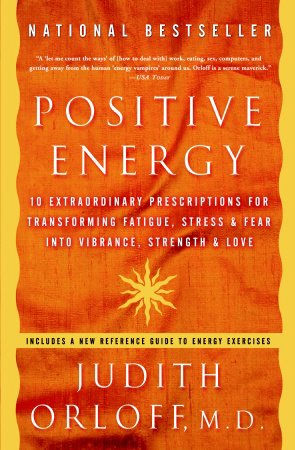
Positive Energy


Veteran psychiatrist Dr. Judith Orloff ventures to spotlight practical Energy Psychiatry, her expertise, a blend of traditional medicine and subtle energies of body and mind in her latest book Positive Energy (Three Rivers Press, New York, 2005). Grounded mainly in the deep-rooted mystical traditions, Energy Psychiatry is a scientific transformation of abstract energy principles for the treatment of a range of everyday problems like anxiety, maladjustment, mood swings, sexual discontent, and the general stresses of life. That makes Positive Energy a book for almost everyone.

Dr. Orloff divides her book in two parts: Building your Energy and Creating Positive Relationships and Combating Energy Vampires. The first part offers seven prescriptions each showing a window to utilizing and boosting one’s subtle energy resources. The second part involves three prescriptions on creating positive relationships, tackling energy-draining people (the Energy Vampires) and tuning in to the abundance of joy all around. Personal experience and stories of her patients make an interesting vista of healing with positivism. What attracts more, perhaps, is the voice of celebrities like Jamie Lee Curtis, Larry King, Shirley Maclaine, and others commenting on their encounters with energy-draining situations. The essence of Dr. Orloff’s advice is her emphasis on staying in the Now that can be procured by some simple exercises, meditations, and mantra.

Given all the good points of the book, Positive Energy has its slack slots. The subject matter is not free of serious speculation. Myths of flowers blooming on the statue of a goddess in South Korea and intuitive premonitions of energy-sensitive people raise doubts. Some of the personal stories are redundant and sound like thrumming on the same string. The narrative mode too feels rather preachy with repetitive reminders of ‘I’ll teach you’, ‘I’ll show you’, ‘You’ll learn’ and so on. Above all, it is the view of existence through the hazy Lens of Energy that puts the author’s viewpoint to question.

A reference guide, brief overview, and an index aid the reader with choice passages.

Positive Energy’s interested readership is wide and varied. For a Type A person, it is a thing to seek. For a hard-shelled scientist, it is one to answer.

ISBN: 1-4000-8216-1

Availability

http://drjudithorloff.com/

http://www.amazon.com/gp/product/1400082161/ref=pd_kar_gw_1/104-2557843-3385568?n=283155

Thursday, February 16, 2006

Amaranth


The distinguishing merit of Michael Ehrenreich’s first novel Amaranth (iUniverse Inc, Nebraska, 2005) is its striking modern realism. A rich imagery of modern city environment, modes of life, and tearing stresses of disease and ugliness make Ehrenreich’s literary fiction a 21st century classic.

Amaranth bears a mature plot. The first 50 pages reveal so much that it’s hard to anticipate the thematic passages as something still on their way. But more comes than one can anticipate. One can tell from the start that the story is nucleated around disease and ugliness, both physical and beyond. Dr. Bing Denton is a surgeon with magic hands who is struggling to save his professional life by putting up with the ugliness of surgical procedures and his family life by trying to be a husband and a father. Standing at the dichotomy of hurting and healing, Dr. Denton finds his teenage daughter, Liza, pregnant in a drug-induced coma. The surgeon extraordinaire has a mind left that presses on itself to remember any of his wife’s friends who might tell him how to reach her and tell her about their child. So much for the sickness of life!

The issue raised in the novel is the quest of beauty by one engulfed in a hollow of ugliness. True beauty must be found and at once since ugliness is contagious as flu. The latter spreads through individuals while the former sweeps generations. And so we meet Ehrenreich’s symbol of beauty amid the sickness, the artistic Deborah who is going to lose her breasts and beauty to cancer. How she heals is the modern-day miracle, the amaranth, of Ehrenreich’s work. As one approaches the end, it gets harder to take the eyes off the spell woven in print. Spiritual self is probed with the lancet of words, an art peculiar to the author’s own experience in medicine.

The feeling of continuity in the narrative is one thing a good novel needs. In Amaranth the absence of page breaks and numbering or naming of chapters attains this, at least in part.

Amaranth’s audience is a mature, thoughtful, sensible adult who is ill at ease with the horrors of disease and ugly attitudes, a heart that seeks beauty in its pure form.

ISB: 0-595-36992-8

Availability

http://iuniverse.com/bookstore/book_detail.asp?isbn=0-595-36992-8

http://www.amazon.com/gp/product/0595369928/sr=8-15/qid=1139831604/ref=sr_1_15/104-8928828-5973567?%5Fencoding=UTF8

Thursday, February 09, 2006

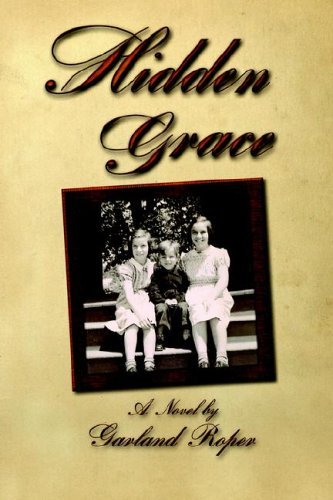
Hidden Grace


Twenty years of Dr. Garland Roper’s experience as a psychotherapist have consummated in the from of a deeply disturbing, insightful, and healing book ‘Hidden Grace’ (Cliffside Press at OMNI, Maine, 2005). A literary novel, a psychological study of psychosexual torture and depression, a case against inhuman foster neglect, and a life-giving look at one woman’s courage in the face of brutal abuse, the merit of ‘Hidden Grace’ is hard to encapsulate in a single instance.

We meet old Grace Albright who revisits her middle-aged therapist Dr. Carl Wilder, a struggling modern-day Sisyphus wrestling with his ‘rock’ of confidence as a therapist, to help her write a book about their therapy. Dr. Wilder narrates memories of Grace’s writings telling, in her words, the story of her early life in foster houses. As Grace opens the chapters of extreme sadistic torture at the hands of her foster families, Dr. Wilder’s depressive view of his own life transforms positively. Together the therapist and the patient rise from their tombs and become living persons in their own flesh, no more given into the torture of slavery.

‘Hidden Grace’ may well be seen as a detective story in literary style. Grace’s unwillingness to speak of her torture kindles the curiosity from the prologue and keeps the flame aglow till the very end of the book. The development of her character, her self-concept as a sinner against herself, challenges notions of established moral concepts. The distinction between sinner and victim of sin is diffused until Grace makes Dr. Wilder (and the reader) see the light.

The language of Gar Roper’s narrative is anything but professional. More important is the narrative device, a combination of first person in Grace and Dr. Wilder’s voices, and Grace’s writings. Events are seen at once through the eyes of both the doctor and her patient. This chimes in with the theme of the novel, a story of participant roles integral to the therapy in question. The discovery and revival of the innocent and loving Grace is accomplished through the written word. That of Dr. Wilder follows and, who knows, of how many eyes and minds.

The impact of Grace’s indelible character is reinforced by the title page. The young girl on the left has face and eyes looking through you. Her beauty is indescribable and her terrors poignant, her sufferings violent enough to tear one apart. And yet Dr. Roper makes such a loving picture of her ripe age that Grace Albright becomes a symbol of convalescence.

The epilogue and author’s note reveal a few facts about the book, concluding with some inspiring words, which might sound rather tame in the face of the novel’s powerful hang over.

Hidden Grace is for us, lovers of beauty, courage, and truth.

ISBN: 0-9768276-0-3

Availability

http://omnilearning.org/HiddenGrace.html
http://www.amazon.com/gp/product/0976827603/qid=1139477886/sr=2-1/ref=pd_bbs_b_2_1/102-4044683-0948909?s=books&v=glance&n=283155

Sunday, February 05, 2006

Scars of the Square Needle


Dick Boucher is a Franco-American who gets himself caught in an alienating Navy venture as he tries to save himself being drafted for the army against Vietnam. What follows is enigmatic, humorous, satirical, and adventurous in Pierre R. Beaumier’s ‘Scars of the Square Needle' (Outskirts Press, Denver, 2005).

Beaumier’s anti-war fiction, a roman a clef, is hard to classify as a novel (who insists?) or a short story (there are over 200 pages). So that leaves one with a ‘protracted story’. Boucher’s character typifies the alienation of an army consign who once had a relationship with art. As the war ends, Boucher finds himself across invisible bars, parting him from the purity of peace. The plot is intelligently woven, though a little more intricately.

Humor tops the attractions of this story (should I?). Use of alliteration is frequent and it reinforces the effect: ‘big belly bobbing up and down’, ‘a beaky pinkish nose rose from…’ Beaumier’s fast tempo of narration baffles at times. You know it’s based on a first-hand account of Vietnam War, so you are looking for a strong personal voice. But that is lacking and you get instead a diffuse hum of many voices. Characters keep busting in and there are a few women on the scene popping up from nowhere to console the shivering Boucher after his nightmares. Most of these disappear brusquely.

Beaumier is likely to attract a large male audience, guys who love to hear about guns and rough language of the military. The actions scenes are thrilling; life runs far from a bed of roses, no matter how much the protagonist hankers after it. What’s precious about the end is that knowing the real scars of Boucher’s life proves far easier than all the babble about the ‘Square Needle’.

ISBN: 1-59800-002-0

Availability

http://www.outskirtspress.com/cgi/webpage.cgi?ISBN=1598000020
http://www.amazon.com/gp/product/1598000020/qid=1138890071/sr=1-1/ref=sr_1_1/002-1429089-8205637?s=books&v=glance&n=283155

Overcoming Runaway Blood Sugar


Dennis Pollock, author, evangelist, and the founder of Spirit of Grace Ministries, offers practical help for hypoglycemic, diabetics, people fighting fatigue and mood swings, the weight-conscious, and the general health-conscious reader in his recent book ‘Overcoming Runaway Blood Sugar’ (Harvest House Publishers, Oregon, 2006). Two qualities of Pollock’s publication distinguish its merit: informative and motivating.

In the foreword to Pollock’s book, Dr. Lee A. Brock defines runaway blood sugar as ‘uncontrolled serum glucose levels’. Pollock shares his own experience of the breakdown of blood sugar system and how he managed to subdue this giant. The informative part of the book has much to convey: two types of diabetes, three big problems of an average American’s health (sedentary lifestyle, diet, weight), common misconceptions about diets, high-carb versus low-carb food, and simple but important strategies to cope with blood sugar conditions.

More important perhaps is the motivational aspect of the book. As it goes in Pollock’s words ‘When it comes to making behavioral changes, motivation isn’t merely important; it is everything!’ By discussing three fronts of the situation (Diet, Exercise, and Weight), the health-conscious reader is thrown into resistance against blood sugar problems. It’s here that the author draws on his own experience as a diabetic to show that one can build power and self-control while enjoying life by shedding the riffraff in diet and lifestyle. Accomplishing so much in a mere 200 pages is indeed extraordinary.

Pollock’s book has adornments. There are short informative sidebars through most of the chapters. The nutritional value of different food items, proper ways of exercising, experiments with blood sugar victims, and interesting facts about food and habits are all included in a healthy mode. It’s a remarkable feature of a book that essentially takes a medical problem but interests the reader like fiction. Three appendices conclude the book: Spiritual Motivation, Sample Meals, and Low-carb Recipes of popular choice meals.

Overcoming Runaway Blood Sugar is for all readers, a must for those in battle with blood sugar illness.

ISBN: 0-7396-1721-7

Availability

http://www.harvesthousepublishers.com/books_nonfictionbook.cfm?ProductID=6917217
http://www.amazon.com/gp/product/0736917217/sr=1-1/qid=1139154334/ref=pd_bbs_1/102-4369681-4998524?%5Fencoding=UTF8